
TL;DR
Stylish leather wallets combine a useful shape, considered construction, and a finish that suits your taste. Choose a wallet around the cards and cash you carry, check how its pockets and seams hold up when loaded, and remember that sizing varies by brand. Full-grain leather often develops a visible patina, while top-grain leather usually has a more uniform finish.
A wallet can look sleek on a shop counter and turn into a brick once you load it with old receipts, loyalty cards, and spare coins. The best stylish leather wallet is the one that still feels right after a week in your pocket.

Get your wardrobe favorites delivered free with Prime
- Fast, free delivery on millions of items
- Prime Video, Amazon Music and more included
- Member-only deals all year
This guide helps you match shape, leather, color, and capacity to the way you dress and pay. You’ll also learn what leather labels do—and don’t—tell you, what to check before buying, and how to care for a wallet without smothering it in conditioner.
There’s no single look that makes a wallet stylish. A clean black cardholder may suit someone who carries two cards, while a warm brown bifold makes more sense if you keep cash and an ID close. Your habits set the starting point; the details make it yours.
Choose the wallet format around the cards, ID, cash, and coins you actually carry.
Compare full-grain and top-grain by the surface and aging you prefer; “genuine leather” alone does not name a high grade.
Check seams, edges, pocket fit, and loaded comfort alongside the leather description.
Sizing and fit vary by brand, so check measurements before buying, especially online.
Keep leather away from prolonged water and direct heat, and test care products on a hidden spot first.
What makes a leather wallet stylish in everyday life?
A leather wallet looks stylish when its shape, finish, color, and details suit both your daily carry and your wardrobe. Neat stitching and smooth edges give it a considered look, while a comfortable size makes that look practical beyond the first day. Style depends on how the wallet fits its owner, not on one universal shape.
For example, if you wear dark denim and a charcoal coat, a black bifold may blend in neatly and hold a few bills. If your clothes lean toward warm neutrals, tan leather can pick up the color of a belt or boots without matching them exactly. Burgundy, navy, and green add character while staying easy to pair with everyday clothes.
Look closely at the construction. Stitching should feel even, seams should sit securely, and pocket openings should hold cards without making them hard to remove. A crisp edge finish and restrained embossing can distinguish a simple design; large logos or shiny hardware may draw more attention than you want. That’s a matter of taste, so handle the wallet and notice which details you keep looking at.
There isn’t one answer to what makes a leather wallet stylish: proportion matters as much as color. A bulky trifold can feel out of place in slim trousers, while a small cardholder may look tidy until you need to carry cash, an ID, and several transit cards. Start with what you carry, then choose the finish that feels like you.
Popular right now

Dyson Ball Animal 3 Upright Corded Vacuum

Bose QuietComfort True Wireless Earbuds with Active Noise Cancellation, Bluetooth 5.3, USB-C Charging, IPX4, Black

KitchenAid 5.5-Quart Bowl-Lift Stand Mixer, Porcelain White
As an affiliate, we earn on qualifying purchases.
Pick the wallet shape that fits what you carry
Stylish leather wallets work best when their format matches your regular load: bifolds balance storage and size, trifolds add pockets, and cardholders keep things compact. A wallet that suits your routine is easier to use and less likely to bulge. Empty-wallet dimensions can mislead, so think about how the design feels once your everyday cards and cash are inside.
Imagine a commuter who carries a driver’s license, two bank cards, a transit pass, and a little cash. A slim bifold may offer enough room without taking over a jacket pocket. Someone who keeps several IDs and receipts might prefer a trifold’s extra storage, while a cardholder fits a person who mostly taps to pay and rarely uses bills. A money clip can keep a few notes handy, but it won’t replace pockets for cards or coins.
| Wallet style | Works well if you carry | Tradeoff |
|---|---|---|
| Bifold | Cards, ID, and folded cash | Can feel thick when overfilled |
| Trifold | More cards and extra compartments | Often adds bulk |
| Cardholder | A small set of essential cards | May have little room for cash |
| Money clip | A few cards and folded bills | Limited storage and organization |
Try the wallet with a realistic load in mind. If you usually carry nine cards, a three-card slot design may stretch or force you to stack them. That can make cards harder to retrieve and put extra strain on the seams, so advertised capacity is less useful than comfortable capacity. Also check the size against your own pockets: wallet dimensions and sizing vary by brand, even when two products share the same name. A wallet that lies flat in a jacket may press uncomfortably in a back pocket, especially when you sit.
Read leather labels without getting fooled by them
Full-grain leather keeps the hide’s natural surface and often gains visible color changes through handling and age. Top-grain leather has been sanded or corrected for a more even appearance. The label “genuine leather” alone tells you little about a wallet’s grade, so check the maker’s fuller description and judge the construction alongside the material.
Say you want a wallet that gradually develops character. A full-grain piece may show darker areas where your hands touch it and lighter ones where light reaches it. That changing surface is called a patina, and it can make two wallets that started alike look different after months of use. It also means the wallet’s appearance becomes less predictable: marks and uneven color may be part of its character, but they may bother you if you want it to stay uniform. Some finishes change less, which may suit you if you prefer a consistent look.
Material names aren’t a shortcut to every quality question. Split and bonded leather are generally less durable, but a leather label won’t tell you whether the pockets are well stitched, whether the edges fray, or how the wallet feels in a pocket. Tanning, finish, construction, use, and care all play a part. For example, a beautiful surface won’t compensate for a card slot that stretches after a few weeks, while sturdy stitching can’t make an overfilled wallet comfortable to carry. A well-made wallet has details that hold together, not just an appealing label.
Ask the brand what its leather terms mean and where the wallet is made. If you’re weighing vegetable-tanned leather, know that plant-derived tannins can give it a distinctive finish and patina; the leather may also be firmer or more water-sensitive than other options. That firmness can feel structured at first, though it may take time to soften with use. Claims such as “handmade” or “sustainable” describe different things and don’t, by themselves, establish a product’s full environmental impact. Ask for specifics about the material and process rather than treating a broad claim as a quality guarantee.
Choose color and details you’ll enjoy carrying
Black and brown wallets are easy to pair with many wardrobes, while tan, burgundy, navy, and green bring a more personal touch. The right choice depends on the colors and accessories you already reach for. Stitching, edge paint, embossing, and hardware can make the wallet distinctive, though quiet details often age more easily than a trend-heavy design.
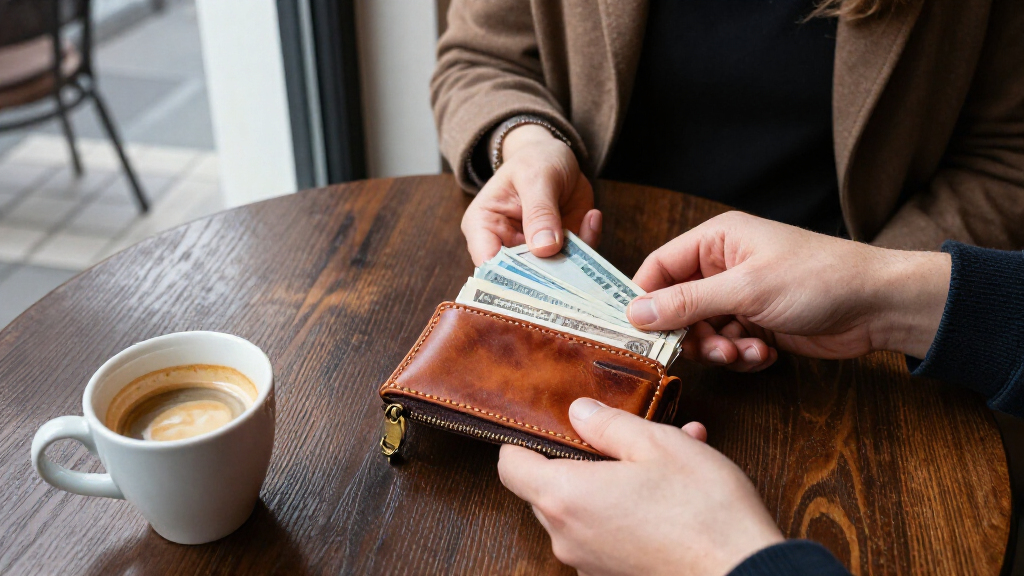
Picture opening a tan wallet at a café checkout. Its warm, slightly irregular surface might pick up the color of a leather bag or boots, even if the shades don’t match. A black wallet offers a sharper, simpler look and can disappear neatly into a work bag. Neither is the smarter choice for everyone; it depends on the way you dress and what you enjoy seeing each day.
When you compare stylish leather wallets, note how a finish interacts with the details. A subtle burgundy edge or a line of contrasting thread may be enough to make a classic bifold feel individual. On another design, a bright clasp or large stamped logo could be exactly the detail that appeals to you. Hold the wallet at arm’s length and inspect it close up; both views matter. Small details can have an outsized effect because you see and handle them often, so consider whether they’ll still feel right when the wallet is no longer new.
If you’re buying a gift, keep the recipient’s habits in the picture. A wallet is personal: someone who wears bright colors may enjoy navy or green, while someone who prefers a pared-back wardrobe may reach for black or brown. If you don’t know their preferred size, color, or carrying habits, choose a simple design with a clear return policy. A thoughtful choice leaves room for the person who’ll carry it.
Use this five-step check before you buy
To choose a leather wallet with confidence, start with your everyday load, compare suitable shapes, and inspect the wallet when you picture it full. These steps help you catch the gap between a polished display piece and something that will feel comfortable in your pocket. Use the same check online by reading the measurements, materials, and return terms before you order.
- Empty your current wallet. Pull out the cards, IDs, cash, and receipts you actually use. If you carry an old store card “just in case” but never reach for it, leave it out of your new wallet. This gives you a realistic baseline and reduces the chance of buying extra capacity that encourages clutter.
- Choose the format. Pick a bifold for a balanced mix, a trifold for more compartments, or a cardholder for a short essential list. If you sit for long periods, consider whether a thick back-pocket wallet feels comfortable. Storage has a physical cost: extra compartments can make organizing easier, but they can also add thickness even when empty.
- Check the material description. Look for a specific leather explanation instead of treating “genuine leather” as a full grade description. Ask what the brand means by its terms if they aren’t clear. The answer helps you judge the likely appearance and aging, but it still won’t establish how well the wallet is assembled.
- Inspect the build. Look for even stitching, secure seams, smooth edges, and pockets that hold cards without trapping them. Check the wallet’s measurements and remember that sizing varies across brands. If you can, test it loaded: a seam or slot that seems fine when empty may feel tight or strained once cards are inside.
- Compare support and claims. Ask about care guidance, warranty or repair options, and sourcing details. Treat RFID blocking as a specific feature—not proof that you no longer need to monitor your cards and accounts. Clear care instructions and repair support can make a wallet easier to keep in use, while vague claims leave you with less information if a problem appears.
This check can spare you a familiar disappointment: ordering a compact wallet online, then discovering that your everyday ID barely fits the slot. If possible, load the wallet with the cards you carry most. If you can’t, study product dimensions and the return policy so you have a way to judge the fit at home. A little extra checking matters because wallet size affects comfort every time you sit, walk, or reach for a card.
Keep your wallet looking good without overcaring for it
Leather stays in better shape when you keep it away from prolonged moisture, harsh heat, and unnecessary products. Brush off dirt or wipe the surface gently with a soft, dry cloth; use a slightly damp cloth only when the finish allows it. Follow the maker’s guidance, since different finishes can respond differently to water and care products. The aim is to remove dirt without stripping or changing the finish, so gentle, occasional cleaning is usually more useful than a frequent routine.
If rain catches you on the walk home, blot the wallet with a clean cloth and let it air-dry away from a radiator or hair dryer. Direct heat can dry or stiffen the leather, and rubbing a wet spot may spread a mark. Once it’s dry, check the maker’s advice before applying any conditioner. A small amount may help when leather feels dry, but too much can leave it greasy or change its finish. Conditioning is therefore a response to the leather’s condition, not a step every wallet needs on a schedule.
Before cleaning or conditioning, test the product on an inconspicuous spot. For instance, a pale tan wallet may darken after conditioning, while a coated finish might not respond like untreated leather. A five-minute test on an inside edge can tell you more than an enthusiastic layer across the whole wallet. If the test area changes in a way you dislike, stop there rather than risking the whole surface.
Regularly remove receipts and cards you no longer carry. Overstuffing can stretch pockets and turn a slim profile into a lumpy one, especially if you force extra cards into a tight slot. This affects more than appearance: stretched slots may stop holding a smaller number of cards securely later. Good care is often simple: carry what you use, wipe away dirt gently, and let the wallet dry at its own pace.
Decide whether slim, RFID, or traceable options suit you
Slim profiles, modular parts, contactless-friendly layouts, and RFID-blocking layers appear in many current wallet designs, but none earns a spot in your pocket automatically. Choose a feature when it solves a problem you actually have. Product specifications vary by maker, so check the details instead of assuming a wallet includes a feature because similar designs do. Each extra feature can also change the wallet’s feel, capacity, or complexity, so weigh its practical benefit against what it adds.
A slim wallet can be practical if it holds your regular cards and cash without strain. If it only fits three cards but you use eight, you may spend the morning moving cards around or stretching the pockets. The advertised thinness then comes at the expense of easy access and lasting fit. A modular wallet may let you detach a cash section for a quick errand, but the extra connection can add parts to a design that would otherwise be simple. Consider how often you would use the removable section; a feature that stays attached all the time may not earn its added bulk.
RFID-blocking layers may offer reassurance, yet their usefulness depends on the cards and how you use them. They don’t protect a card you’ve lost, and they don’t replace checking account activity or reporting the loss. Think of blocking as one feature among many, like a zipped pocket: potentially useful for your routine, not a substitute for good habits. If you already carry cards that don’t rely on the relevant contactless technology, the layer may add little practical value for you.
If traceable sourcing matters to you, ask the maker what “traceable” covers and how it documents its claim. Repair support can matter just as much as a material description: a brand that explains how it handles worn stitching gives you a clearer picture of support after purchase. Consider the wallet as a whole—materials, construction, use, and the maker’s answers—rather than letting one appealing feature make the decision. The better choice is the one whose benefits you’ll use and whose tradeoffs you can live with.
Frequently Asked Questions
What is the best leather for a wallet?
Full-grain leather is often chosen for its natural surface and the patina it can develop. Top-grain leather offers a more even finish. Quality also depends on tanning, construction, how you use the wallet, and the care guidance from its maker.
What does “genuine leather” mean on a wallet?
“Genuine leather” is a broad label, not a complete description of a leather grade or the wallet’s overall quality. Ask the maker what material it uses, then check the stitching, edges, pocket fit, and warranty or repair support.
How do I choose between a bifold, trifold, and cardholder?
A bifold balances cards, ID, and folded cash; a trifold adds storage but may feel bulkier; a cardholder works for a small set of essentials. Compare those formats against what you carry on a normal day, and check the measurements because sizing varies by brand.
Do leather wallets get better with age?
Some leather develops a patina: changes in color and surface from light, handling, and oils. Other finishes change very little, and scratches or stains may stay visible. If you want a changing surface, ask the maker how that leather finish typically ages.
Are slim wallets practical?
They are practical when they hold your usual cards and cash comfortably. A wallet that is too small can make everyday errands awkward, while overfilling can stretch its pockets and spoil the slim shape.
Are RFID-blocking wallets necessary?
The practical benefit depends on your cards and circumstances, so RFID blocking is best treated as a feature you can weigh against your needs. It does not replace monitoring your accounts or reporting a lost card.
How should I clean and condition a leather wallet?
Wipe it gently with a soft, dry cloth, or a slightly damp cloth if the maker says that suits the finish. Test any care product on a hidden area, use conditioner sparingly when needed, and let a wet wallet air-dry away from direct heat.
Conclusion
Choose a wallet by the life it has to live: the cards you carry, the pockets you use, and the finish you want to see soften with time. Check its construction and loaded fit before you buy, then give the leather simple, gentle care.
The right wallet won’t ask you to rearrange your day around it. It will settle into your pocket—and, little by little, into your own story.