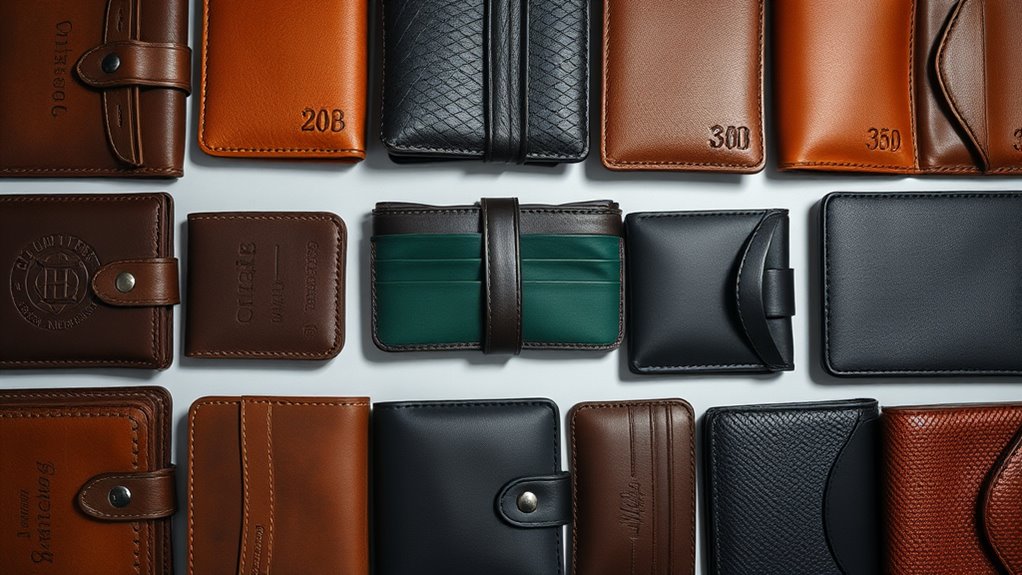

Men’s wallets have evolved from simple leather pouches to stylish, multifunctional accessories. Over time, designers added compartments for cards, cash, and coins, while innovations like RFID-blocking and slim profiles emerged. Modern wallets showcase a variety of materials, from classic leather to eco-friendly options, reflecting personal style and social status. If you’re interested, you’ll discover how these changes continue to shape wallets today and what’s ahead for their future.
Key Takeaways
- Wallets evolved from simple leather pouches to sophisticated designs with multiple compartments.
- Introduction of synthetic materials and metal accents enhanced durability and aesthetic appeal.
- Classic bifold and trifold styles were refined for better usability and style.
- Modern wallets incorporate RFID-blocking technology and minimalistic designs for security and convenience.
- Eco-friendly and innovative materials reflect current trends in sustainability and personal expression.

Throughout history, men’s wallets have evolved from simple pouches to sophisticated accessories that reflect personal style and social status. In the earliest days, wallets were basic containers made from natural materials like leather, fabric, or even animal hides. Over time, the material evolution played a significant role in shaping their functionality and appearance. As craftsmanship improved, so did the durability and aesthetic appeal of wallets. Leather remained a favorite, thanks to its strength and timeless look, but innovations introduced new materials like synthetic fabrics, nylon, and even metal accents. These advancements allowed for lighter, more resilient designs that could withstand everyday wear and tear, guaranteeing your wallet stayed intact longer.
Men’s wallets have evolved from simple leather pouches to durable, stylish accessories with innovative materials and features.
Design innovations also transformed how wallets serve their purpose. Initially, they were simple pouches with no compartments, just enough space to carry coins or small items. As needs grew, designers began adding features like card slots, bill compartments, and even coin pockets, making wallets more organized and efficient. Slimmer profiles emerged as a response to the desire for minimalism, allowing you to carry essentials without bulk. In recent decades, RFID-blocking technology was integrated into many wallets, offering added security in an increasingly digital world. This innovation protects your personal information from electronic pickpocketing, blending safety with style.
The visual appeal of wallets has seen continuous improvement through design innovations. Classic bifolds and trifold designs have been refined for better usability, with some wallets now featuring quick-access slots or transparent ID windows. The choice of materials and craftsmanship also influences the overall look—hand-stitched details, embossed logos, and contrasting trims give wallets a distinctive personality. You now have options that range from luxurious full-grain leather to eco-friendly vegan materials, catering to diverse tastes and values. This variety allows you to select a wallet that not only fits your needs but also makes a statement about your personal style and social identity.
Ultimately, the material evolution and design innovations of men’s wallets demonstrate how this accessory has adapted over time. It’s no longer just a means to carry cash and cards; it’s a reflection of your lifestyle, values, and individuality. Whether you prefer a sleek, minimalist design or something more ornate, the ongoing innovations ensure you have access to wallets that combine functionality, durability, and style—perfectly aligned with your everyday needs and personal expression. Additionally, the use of modern materials enhances the wallet’s resilience and aesthetic appeal, ensuring it remains a functional and stylish accessory for years to come.

RUNBOX Wallet for Men – Slim Rfid Leather Bifold 2 ID Window With Gift Box Men's Accessories
Slim and Thin Wallet – This minimalist bifold wallet measures 4.3×3.2×0.6 inches and stores up to 15 cards….
As an affiliate, we earn on qualifying purchases.
As an affiliate, we earn on qualifying purchases.
Frequently Asked Questions
What Materials Were Used in Ancient Men’s Wallets?
Ancient men’s wallets were typically made from materials like ancient leather and fabric wallets. Leather was favored for its durability and ease of craftsmanship, often crafted from animal hides. Fabric wallets, on the other hand, were more flexible and lightweight, made from woven textiles or cloth. You might have carried a simple leather pouch or a fabric wallet, both serving to store coins, tokens, or small valuables securely.
How Have Men’s Wallet Designs Evolved Over Centuries?
You’ll notice that men’s wallet designs have evolved considerably over centuries, driven by design innovations and aesthetic trends. Early wallets were simple pouches, but now, they feature sleek, minimalist styles or intricate craftsmanship. Modern wallets incorporate RFID-blocking technology, multiple compartments, and premium materials. As trends shift, you see a focus on functionality and style, blending tradition with innovation to suit contemporary preferences and lifestyles.
Which Cultures First Popularized the Wallet Concept?
You might say wallets sailed into history on ancient trade routes, first popularized by the Romans and Chinese. These cultures used wallets not just for carrying coins, but as symbols of status and cultural identity—like badges of honor. Their designs reflected cultural symbolism, making wallets more than mere containers. By blending practicality with tradition, they set the stage for the diverse styles and functions we see today.
Are There Any Notable Historical Figures Associated With Wallet Innovations?
You’ll find that some historical figures, like King Louis XVI, are linked to wallet innovations, especially in the development of more secure and stylish designs. Innovators such as Charles Green and Samuel Morse also played roles in wallet improvements, focusing on functionality and security. These figures helped shape how wallets evolved, making them more practical and personalized. Their contributions highlight the ongoing pursuit of better wallet innovations throughout history.
How Do Men’s Wallets Differ Across Various Regions and Traditions?
Imagine opening a wallet that reflects your heritage—leather embossed with intricate patterns from Asia, or a sleek, minimalist design from Scandinavia. Men’s wallets differ across regions and traditions through cultural variations like craftsmanship, materials, and styles. From vibrant, decorated pieces in Africa to slim, functional designs in Japan, regional styles showcase unique aesthetics and values, allowing you to carry a piece of your identity wherever you go.

Real Leather Mens Bifold Wallet RFID Blocking Slim Minimalist Front Pocket – Thin & Stylish with ID Window in Gift Box (Crazy Horse, Coffee)
★REAL LEATHER: This wallet is MADE IN INDIA and comes in 2 leather qualities, namely Nappa and Crazy…
As an affiliate, we earn on qualifying purchases.
As an affiliate, we earn on qualifying purchases.
Conclusion
As you’ve seen, men’s wallets have evolved dramatically, reflecting changing styles and needs. From simple pouches to sleek designs, they tell a story of practicality and identity. Isn’t it fascinating how something so small can hold so much history? As you choose your next wallet, remember you’re not just carrying cash—you’re carrying a piece of history that’s still unfolding. Will your wallet be part of the next chapter? The choice is yours.

boshiho RFID Blocking Cork Wallet, Slim Bifold Vegan Credit Card Holder Purse Eco Friendly Gift for Men and Women (Black A)
SLIM DESIGN – This cork wallet for men is twice lighter than leather wallet, this wallet for men…
As an affiliate, we earn on qualifying purchases.
As an affiliate, we earn on qualifying purchases.

AUTLEY Slim Card Holder, Minimalist Pop Up Wallet for Men, RFID Blocking Mens Wallet with Cash Band (Dark green, Black)
【Slim Card Wallet】With sleek compact design, AUTLEY mens wallet is smaller, not bulky like the traditional wallets. Fits…
As an affiliate, we earn on qualifying purchases.
As an affiliate, we earn on qualifying purchases.