
Travel has greatly influenced bag design by driving innovations in materials, from natural fibers to lightweight synthetic fabrics, to withstand various environments. Cultural exchanges along trade routes added unique motifs and functional features, shaping aesthetics and usability. As travel became more accessible, designs evolved with water resistance, modular compartments, and durability in mind. These changes reflect a rich history of technological progress, cultural interaction, and adaptation—discover how these elements continue to shape modern bags as you explore further.
Key Takeaways
- Travel needs drove innovations in bag materials, making them more durable, lightweight, and weather-resistant.
- Cross-cultural exchanges introduced new motifs and functional features, enriching bag design.
- Increased accessibility to travel prompted modular and multi-purpose bag designs for convenience.
- Technological advances enabled stronger, lighter, and more versatile materials in bag manufacturing.
- Evolving travel lifestyles influenced the aesthetic and functional evolution of bag styles over time.
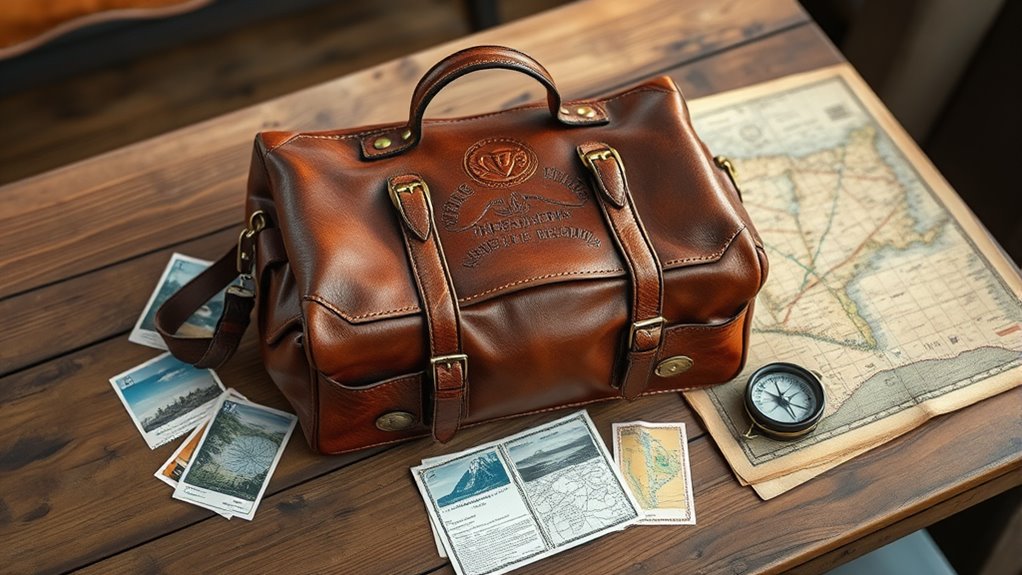
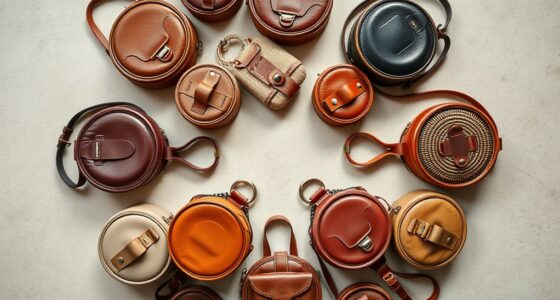
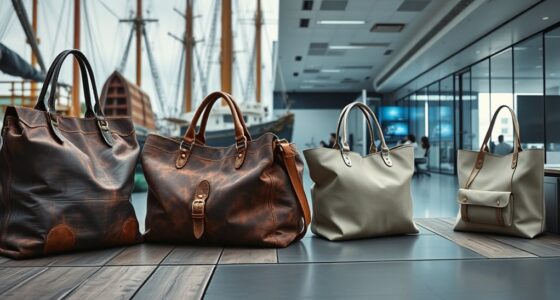
Travel and bag design have evolved hand in hand, reflecting changing lifestyles, technological advances, and shifting fashion trends. As you explore the history of travel gear, you’ll notice how material innovation has played a pivotal role in shaping the way bags are crafted. Early travelers relied on simple pouches and sacks made from natural fibers, but as technology progressed, so did the materials. The introduction of durable leather, lightweight canvas, and, later, synthetic fabrics transformed bags into more functional and long-lasting companions. These innovations made it easier for you to carry your essentials over longer distances, in different climates, and during various modes of transportation.
Travel gear has evolved with innovations in materials, from natural fibers to synthetic fabrics, enhancing durability and functionality.
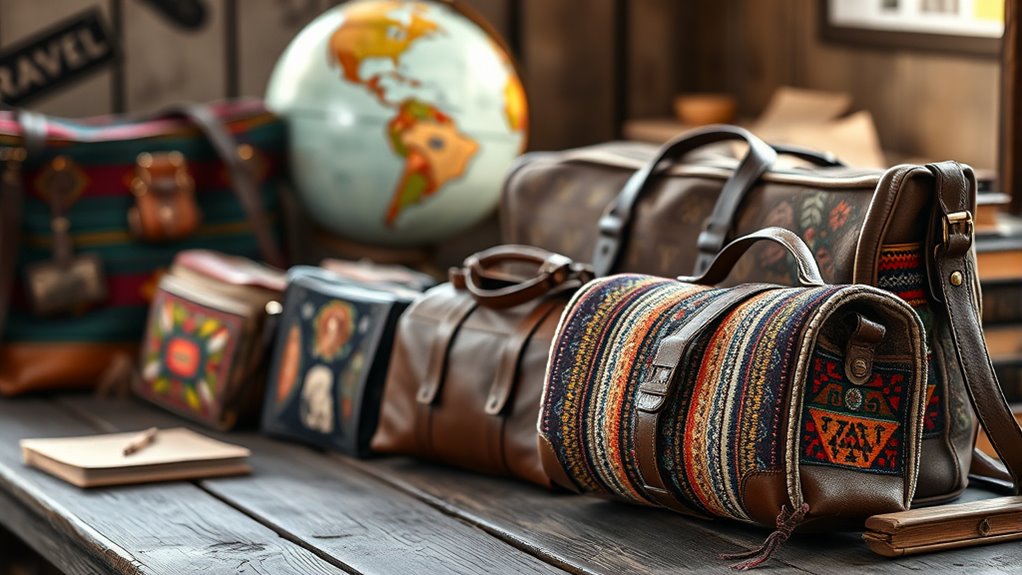
Cultural exchange is another essential factor that influenced bag design throughout history. When different cultures interacted through trade routes like the Silk Road or the Age of Exploration, they exchanged ideas, craftsmanship techniques, and materials. This cross-pollination resulted in unique bag styles and functionalities that reflected diverse needs and aesthetic preferences. For instance, you might notice how traditional Japanese or Middle Eastern motifs found their way into Western travel bags, creating a fusion of design elements that appealed to a broader audience. The blending of cultural influences not only enhanced the visual appeal of bags but also introduced innovative features inspired by different ways of life. You benefit from this rich history every time you carry a bag that combines practicality with a touch of cultural artistry.
As travel became more accessible to the masses, manufacturers started experimenting with new materials that could withstand the rigors of frequent use. The development of water-resistant fabrics and lightweight composites allowed for bags that could adapt to varying environments while remaining comfortable to carry. These advances were driven by the necessity to improve durability and functionality, making your travel experience smoother. Furthermore, the global exchange of ideas accelerated the development of modular designs and multi-purpose compartments, catering to the needs of modern travelers who seek efficiency and versatility in their luggage. Material innovation has played a crucial role in this ongoing evolution, enabling bags to meet the diverse demands of travelers across different eras.
In essence, the evolution of bag design in response to travel needs is a story of continuous innovation and cultural dialogue. Material innovation made bags stronger and lighter, while cultural exchange infused them with diverse aesthetics and ideas. So, every time you pick up a travel bag, you’re holding a piece of history that reflects centuries of technological progress and cross-cultural collaboration, designed to enhance your journeys and adapt to your ever-changing way of life.

MATEIN Carry on Backpack, Extra Large Travel Backpack Expandable Airplane Approved Weekender Bag for Men and Women, Water Resistant Lightweight Daypack for Flight 40L, Black
Expandable & Large Capacity: This extra large travel backpack with expandable feature offers you more packing capacity. Unzipping…
As an affiliate, we earn on qualifying purchases.
As an affiliate, we earn on qualifying purchases.
Frequently Asked Questions
How Did Travel Restrictions Impact Bag Design Evolution?
Travel restrictions made you prioritize practicality and security in bag design. You’ll notice brands focus on ergonomic features for comfort and ease of carrying, especially during short trips. Luxury branding also shifted to incorporate discreet, secure closures, appealing to travelers seeking elegance without sacrificing safety. These changes make your bags more user-friendly and stylish, reflecting the new travel realities while maintaining a sense of luxury and sophistication.
What Materials Were First Used in Travel Bags Historically?
You’ll be amused to learn that the first travel bags were crafted from vintage leather, a material as tough as your stubborn travel plans. Over time, textile evolution brought lighter, more flexible fabrics into play, making your journeys less cumbersome. Imagine lugging around a heavy leather sack—sure, it oozed vintage charm, but today’s textile options offer style and practicality, transforming travel gear from clunky to chic with just a stitch.
Which Cultures Influenced Modern Bag Styles During Travel?
You’re influenced by diverse cultures that shaped modern travel bag styles through their unique cultural aesthetics and regional craftsmanship. For example, European designs emphasize elegance and leatherwork, while Asian influences incorporate intricate textiles and vibrant patterns. Middle Eastern craftsmanship adds detailed embroidery, and African designs bring bold colors and beadwork. These cultural elements blend into contemporary bags, creating a rich, global aesthetic that reflects travel’s inspiration and diverse artistic traditions.
How Did Technological Advances Shape Bag Functionality Over Time?
Imagine your bag as a trusty steed, evolving with every ride. Technological advances have upgraded it with modern security features and lightweight materials, making travel safer and easier. These innovations act like armor and wings, protecting your belongings while reducing weight. You now enjoy bags that are more functional, durable, and comfortable, allowing you to move freely across borders, knowing your essentials are secure and effortless to carry.
What Role Did Famous Travelers Play in Bag Innovation?
Famous explorers and celebrity travelers have considerably driven bag innovation. When you see their influence, you realize how their needs for durability, convenience, and style pushed designers to create smarter, more functional luggage. Their adventures often demand specialized features, inspiring new materials and designs. You benefit from their pioneering spirit, as these travelers’ demands lead to bags that better suit your journeys, blending style with practicality.

Trilogy Modular System I Modular 4-wheel spinner carry-on, with two zip-off bags! All 3 are Expandable! You get 3 bags in 1! Mix and match; take apart to fit crowded airplane spaces (Black)
World's most advanced modular 4-wheel spinner!
As an affiliate, we earn on qualifying purchases.
As an affiliate, we earn on qualifying purchases.
Conclusion
As you reflect on travel’s impact on bag design, remember how the traveler’s journey mirrors the evolution of innovation and style. Like Odysseus steering uncharted waters, you become part of a timeless story where practicality meets artistry. Every zipper, handle, and fabric tells a tale of discovery and adaptation. Embrace this history, for in your hands lies the continuation of a legacy shaped by wanderers and dreamers across centuries.

Fmeida 65L Duffle Bag with Shoes Compartment, Foldable Travel Duffel Bags for Men Women, Large Packable Travel Bag Water Repellent & Tear Resistant (Black)
Large Capacity & Foldable: This foldable duffel bag has a large capacity of 65L and can be fast…
As an affiliate, we earn on qualifying purchases.
As an affiliate, we earn on qualifying purchases.
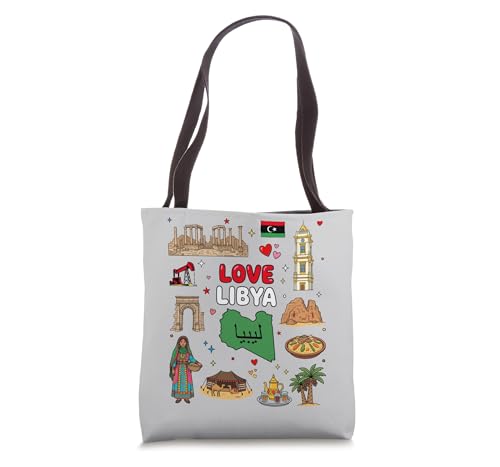
Libya Cultural Icons Collage, Desert Heritage and Travel Art Tote Bag
Celebrate Libya with a colorful illustration featuring iconic landmarks, desert culture, traditional clothing, historic architecture, palm trees, tea…
As an affiliate, we earn on qualifying purchases.
As an affiliate, we earn on qualifying purchases.