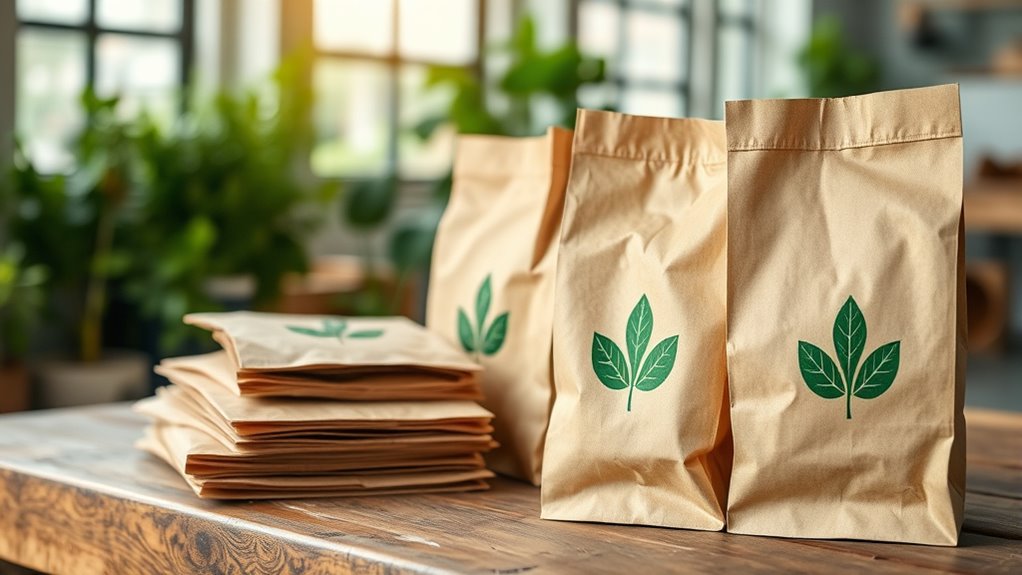

Sustainable packaging in the bag industry helps reduce environmental impact by using biodegradable materials from renewable resources like cornstarch, plant fibers, and sugarcane. It involves eco-friendly manufacturing practices that conserve energy and water while enhancing brand trust. Innovative designs focus on lightweight and modular features, making disposal easier and more eco-conscious. Certifications like ASTM D6400 ensure products meet compostability standards. To discover how these strategies can benefit your business, keep exploring this important topic further.
Listen free for 30 days with Audible
Thousands of audiobooks and originals — cancel anytime.
As an affiliate, we earn on qualifying purchases.
Key Takeaways
- Adoption of biodegradable materials like plant fibers and cornstarch reduces environmental impact in bag manufacturing.
- Implementing eco-friendly production practices minimizes energy use, emissions, and water consumption.
- Innovative design strategies, such as lightweight and modular bags, promote material efficiency and recyclability.
- Certifications like ASTM D6400 and EN 13432 ensure bags meet compostability standards and enhance credibility.
- The shift toward sustainable packaging aligns with consumer demand for eco-conscious products and supports circular economy initiatives.

As the bag industry evolves, sustainable packaging has become indispensable for reducing environmental impact and meeting consumer demand for eco-friendly products. You’re likely aware that traditional packaging materials contribute markedly to pollution and landfill waste. That’s why many manufacturers are turning to biodegradable materials, which break down naturally without leaving harmful residues. These materials, derived from renewable resources like cornstarch, sugarcane, and plant fibers, give you a way to create packaging that is both functional and environmentally responsible. By choosing biodegradable options, you help reduce the reliance on plastics that take centuries to decompose, addressing a critical issue in waste management.
Eco-friendly manufacturing practices play a crucial role in the shift toward sustainability. This approach involves minimizing energy consumption, reducing emissions, and limiting the use of hazardous chemicals during production. You can incorporate eco-friendly manufacturing by optimizing processes to be more energy-efficient, utilizing renewable energy sources, and adopting water conservation techniques. These practices not only lessen your environmental footprint but also appeal to environmentally conscious consumers who seek transparency and responsibility from brands. When you implement sustainable manufacturing, you demonstrate your commitment to the planet while potentially lowering costs in the long run.
In addition, sustainable packaging solutions often involve innovative designs that maximize material use and reduce waste. For example, you can develop lightweight bags that use less material without sacrificing strength or durability. Modular designs that are easy to recycle or compost further enhance the eco-friendliness of your products. Using biodegradable materials in these designs ensures that, at the end of their lifecycle, your packaging won’t contribute to pollution. Instead, it will naturally decompose, returning nutrients to the environment and closing the loop in a circular economy. Incorporating certification standards can also help verify the eco-friendliness of these materials and designs.
You should also consider the importance of certifications and standards that verify the eco-friendliness of your packaging materials. Certifications like ASTM D6400 or EN 13432 ensure that your biodegradable materials meet specific criteria for compostability. These endorsements not only boost your credibility but also reassure consumers that your products align with their values. Promoting the sustainable aspects of your packaging can differentiate your brand in a competitive market, helping you build loyalty among eco-conscious customers.
Ultimately, embracing biodegradable materials and eco-friendly manufacturing isn’t just a trend—it’s a necessity for a sustainable future. By making these conscious choices, you contribute to reducing plastic waste, lowering carbon emissions, and promoting responsible consumption. Your efforts can inspire others in the industry to follow suit, creating a ripple effect that pushes the entire bag sector toward more environmentally friendly practices.
As an affiliate, we earn on qualifying purchases.
Frequently Asked Questions
How Do Biodegradable Bags Compare in Durability to Traditional Options?
Biodegradable bags offer decent durability, but they generally don’t match traditional options. Their material performance can vary depending on the specific bioplastic used, often making them less resistant to tears and moisture over time. You might notice they break down faster in composting environments, but for heavy or long-term use, traditional bags tend to be more reliable. Choosing the right option depends on your durability needs and environmental goals.
What Are the Cost Implications of Switching to Sustainable Packaging?
Switching to sustainable packaging is like planting a seed for future savings. Your cost analysis shows initial expenses may be higher, but long-term benefits grow as waste costs drop. Supplier considerations are key; choosing eco-friendly vendors might mean paying a bit more upfront. However, over time, you’ll see lower disposal costs and a stronger brand image, making the investment worthwhile. Embrace sustainability for both your wallet and the planet.
How Can Brands Effectively Communicate Eco-Friendly Practices to Consumers?
To effectively communicate your eco-friendly practices, focus on boosting consumer awareness through clear, transparent messaging. Incorporate eco-friendly visuals and certifications on your packaging to reinforce your commitment. Use branding strategies that highlight your sustainability efforts across all channels—social media, website, and in-store displays—so customers understand your dedication. Engage your audience with stories about your sustainable initiatives, making your eco-conscious efforts relatable and inspiring trust.
What Regulatory Standards Govern Sustainable Packaging in the Bag Industry?
You need to guarantee your packaging complies with regulatory standards like ASTM D6400 or EN 13432, which govern compostability and recyclability. Focus on achieving certification standards such as FSC or Green Seal to prove eco-friendliness. Regulatory compliance involves staying updated on local laws, like the US EPA’s guidelines, and implementing sustainable practices accordingly. This not only helps you meet legal requirements but also builds consumer trust in your eco-conscious brand.
Are There Innovative Materials Emerging for Eco-Friendly Bag Manufacturing?
You should know that innovative materials like biodegradable composites and plant-based polymers are emerging for eco-friendly bag manufacturing. These materials break down more easily and reduce environmental impact, making your products more sustainable. By adopting biodegradable composites, you guarantee your bags decompose naturally, while plant-based polymers offer renewable alternatives to traditional plastics. Incorporating these innovations can help you stay ahead in eco-conscious markets and meet growing consumer demand for sustainable packaging.
As an affiliate, we earn on qualifying purchases.
Conclusion
Think of sustainable packaging as the sturdy ship steering through turbulent waters. By choosing eco-friendly materials, you’re not just sailing smoothly today but charting a course for a healthier tomorrow. Every bag you select acts like a crucial anchor, grounding your commitment to the planet. Together, we can navigate toward a future where your industry leads the way, proving that with the right choices, we can truly change the course of environmental impact—one bag at a time.
eco-friendly bag manufacturing supplies
As an affiliate, we earn on qualifying purchases.
As an affiliate, we earn on qualifying purchases.
As an affiliate, we earn on qualifying purchases.
NFL season / tailgating Picks
team gear
As an affiliate, we earn on qualifying purchases.