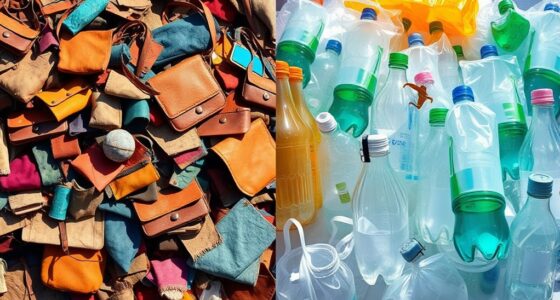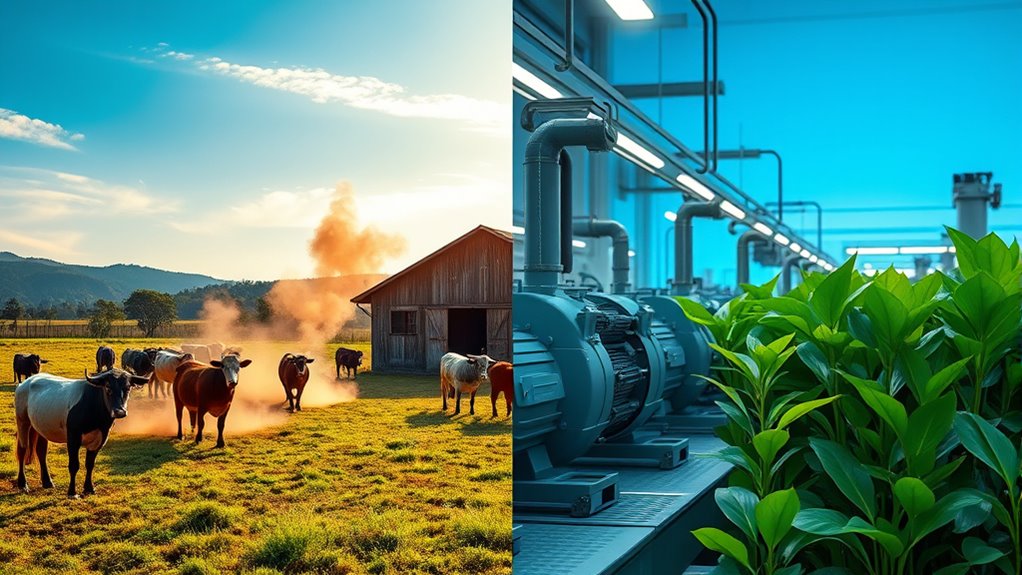

When comparing the carbon footprints of leather and vegan leather, you’ll find that traditional leather often has a higher impact due to livestock emissions and land use, while vegan options typically rely on petroleum-based or plant materials, which also have environmental costs. Eco friendly dyes and responsible sourcing can reduce some impacts, but overall, vegan leather tends to have a lower carbon footprint. To understand how these differences can affect your choices, keep exploring this topic further.
Listen free for 30 days with Audible
Thousands of audiobooks and originals — cancel anytime.
As an affiliate, we earn on qualifying purchases.
Key Takeaways
- Traditional leather production involves livestock raising, significantly increasing greenhouse gas emissions compared to vegan leather.
- Vegan leather typically has a lower carbon footprint due to the absence of animal agriculture, but its impact depends on raw materials like plastics.
- The use of eco friendly dyes in both leather types reduces chemical pollution and energy consumption during manufacturing.
- Manufacturing processes for vegan leather often rely on petroleum-based materials, contributing to carbon emissions.
- Lifecycle assessments show that responsible sourcing and sustainable practices can further reduce the overall carbon footprint of both leather types.

When comparing the environmental impacts of traditional leather and vegan leather, understanding their respective carbon footprints is essential. Your choices in sourcing materials can markedly influence the overall sustainability of the products you use. Traditional leather often involves processes that rely heavily on sustainable sourcing, which means selecting hides from animals raised in environmentally responsible ways. However, the tanning process can be resource-intensive, especially when it uses harmful chemicals. In contrast, vegan leather is usually made from synthetic or plant-based materials, which can reduce some environmental burdens. Still, the production methods for vegan leather vary widely, and some involve chemicals that are not eco-friendly.
Both traditional and vegan leather have distinct environmental impacts and carbon footprints to consider.
One key factor that impacts the carbon footprint of both types of leather is the use of eco friendly dyes. When you choose products dyed with environmentally conscious dyes, you help minimize chemical runoff and water pollution, which are common issues in traditional leather processing. Eco friendly dyes often require less water and energy during application, further reducing the overall carbon emissions associated with manufacturing. In traditional leather, dyes are often synthetic and may involve hazardous substances that require extensive treatment or disposal, adding to their environmental cost. Vegan leather made with eco friendly dyes can offer a more sustainable alternative, especially if the manufacturing process emphasizes minimal chemical use and low energy consumption.
The production of traditional leather generally involves raising livestock, which contributes markedly to greenhouse gas emissions. Methane released by cattle, combined with land use changes and feed production, amplifies the carbon footprint associated with leather. While sustainable sourcing can mitigate some of these impacts, it doesn’t eliminate them entirely. Vegan leather, on the other hand, does not require animal agriculture, which inherently reduces emissions related to land use and methane production. However, many vegan leathers are derived from plastics like polyurethane or PVC, which are petroleum-based and have their own environmental issues, including carbon emissions during production and challenges in recycling. Incorporating sound design techniques into the manufacturing process, such as digital sound synthesis, can help innovate ways to reduce environmental impact and promote more sustainable practices.
Ultimately, your choice between traditional and vegan leather hinges on a range of factors, including how responsibly the raw materials are sourced, the environmental impact of dyes used, and the manufacturing processes involved. If you prioritize eco-friendly dyes and sustainable sourcing, vegan leather has the potential to offer a lower carbon footprint. But it’s essential to weigh the full lifecycle of the product, from raw material extraction to disposal, to truly understand its environmental impact. Making informed decisions can help you support more sustainable fashion and reduce your own carbon footprint.
As an affiliate, we earn on qualifying purchases.
Frequently Asked Questions
How Does Water Usage Compare Between Leather and Vegan Leather Production?
You’ll find that vegan leather generally uses less water during production because it involves fewer resource-intensive processes. By prioritizing water conservation and resource efficiency, vegan options tend to have a smaller water footprint compared to traditional leather, which requires significant water for tanning and processing. This makes vegan leather a more sustainable choice if you’re aiming to reduce water consumption and promote eco-friendly practices.
What Are the Chemical Pollutants Involved in Manufacturing Each Material?
Think of manufacturing as a chemical battleground. Leather production releases chemical emissions like chromium and formaldehyde, leading to toxic residues that can harm ecosystems. Vegan leather, on the other hand, often involves plastics like PVC, which emit volatile organic compounds (VOCs) during processing. Both materials carry chemical risks, but vegan options tend to use fewer toxic residues, though they still pose environmental challenges. Stay aware of these hidden pollutants in your choice.
How Recyclable Are Traditional Leather and Vegan Leather Products?
You’ll find that traditional leather has limited recyclability due to its complex tanning processes and chemical treatments, which pose recyclability challenges. However, it does have some reuse potential if properly processed. Vegan leather, on the other hand, varies widely; some types are recyclable, but others aren’t because of synthetic materials. Overall, both face recyclability challenges, but innovations are improving their reuse potential, aiming for more sustainable disposal options.
What Is the Impact of Transportation on Their Overall Carbon Footprint?
You’re really adding fuel to the fire with transportation’s impact on their footprints. Transportation emissions and supply chain logistics considerably influence the overall carbon footprint of both leather and vegan leather products. Longer shipping routes and heavier materials increase emissions, making local sourcing a smart move to cut down on environmental impact. So, you can make a difference by choosing brands that prioritize sustainable logistics and reduce unnecessary transportation.
Are There Eco-Friendly Certifications for Sustainable Leather or Vegan Alternatives?
Yes, there are eco-friendly certifications for sustainable leather and vegan alternatives. You can look for eco labels like GOTS, Fair Trade, and Leather Working Group, which guarantee ethical and environmental standards are met. Certification standards verify that the materials are produced with reduced environmental impact, supporting your goal to choose eco-conscious products. Always check for these labels to make informed, sustainable choices when buying leather or vegan options.
As an affiliate, we earn on qualifying purchases.
Conclusion
When comparing the carbon footprints, vegan leather typically produces about 70% less greenhouse gases than traditional leather. This significant reduction means you can enjoy stylish, cruelty-free options while helping the environment. Keep in mind, choosing vegan leather isn’t just trendy—it’s a smarter choice for reducing your impact. So next time you shop, remember that your decision could cut your carbon footprint considerably, making a real difference for our planet’s health.
sustainable vegan leather backpack
As an affiliate, we earn on qualifying purchases.
As an affiliate, we earn on qualifying purchases.
As an affiliate, we earn on qualifying purchases.
NFL season / tailgating Picks
team gear
As an affiliate, we earn on qualifying purchases.