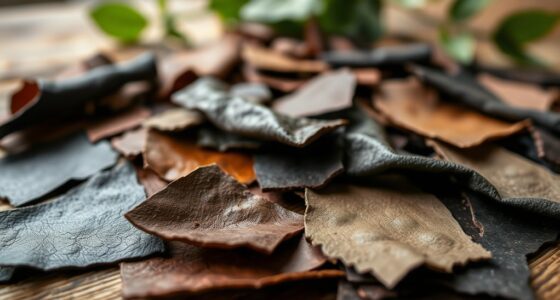
Plant-based leathers are eco-friendly alternatives that transform plant fibers like pineapple leaves and mushroom mycelium into durable, flexible materials. You can support sustainability by choosing products made from these innovative sources, which reduce waste, lower carbon footprints, and avoid harmful chemicals used in traditional leather tanning. Advances in manufacturing make these materials stronger and more versatile. Keep exploring how these sustainable options can change the future of fashion and design.

Get your wardrobe favorites delivered free with Prime
- Fast, free delivery on millions of items
- Prime Video, Amazon Music and more included
- Member-only deals all year
Key Takeaways
- Plant-based leathers are sustainable alternatives made from renewable sources like pineapple leaves and mushroom mycelium.
- Pineapple leather is produced by processing leaf fibers through chemical-free methods, reducing waste and environmental impact.
- Mushroom leather (mycelium) is grown via controlled fermentation, requiring minimal water and energy for durable, flexible material.
- These materials eliminate harmful chemicals used in traditional tanning, promoting eco-friendly manufacturing practices.
- Ongoing research aims to enhance durability, scalability, and environmental benefits of plant-based leathers across industries.

As awareness of environmental issues grows, plant-based leathers are emerging as a sustainable alternative to traditional animal-derived materials. You might be surprised to learn how these innovative materials are reshaping fashion and product design, all while prioritizing sustainable sourcing and manufacturing innovations. Unlike conventional leather, which involves raising and processing animals, plant-based leathers derive from renewable, eco-friendly sources, making them a smarter choice for the planet. Companies are now focusing on sustainable sourcing, ensuring that the raw materials used—like pineapple leaves, mushrooms, or cactus—are harvested responsibly without depleting natural resources or causing environmental harm. This approach reduces waste, supports local communities, and minimizes the carbon footprint associated with production.
Manufacturing innovations play a vital role in bringing these plant-based leathers to market. Advanced techniques allow producers to transform raw plant fibers into durable, flexible materials that mimic the qualities of traditional leather. For example, mushroom-based leather, or “mycelium,” is grown through a controlled fermentation process that uses minimal water and energy, making it both eco-friendly and scalable. Similarly, pineapple leaf fibers are processed into leather-like sheets through innovative methods that avoid harmful chemicals often used in traditional tanneries. These manufacturing breakthroughs not only improve the quality and durability of plant-based leathers but also substantially cut down on the environmental impact. Additionally, researchers are exploring ways to incorporate biodegradable components, further enhancing the sustainability of these materials and ensuring they leave minimal long-term environmental impact once disposed of.
Popular right now

Jura E6 Automatic Espresso Machine, Piano Black (15622)

Bose QuietComfort Wireless Noise-Cancelling Headphones, Petal Pink

Shark PowerDetect Corded Stick Vacuum with HEPA Filtration, Purple (HZ4001AMZ)
As an affiliate, we earn on qualifying purchases.
Frequently Asked Questions
How Do Plant-Based Leathers Compare in Durability to Traditional Leather?
You’ll find plant-based leathers are quite durable, often comparable to traditional leather. Their tanning processes improve strength and water resistance, making them suitable for everyday use. Material flexibility varies, but many options are soft yet resilient, providing longevity. While some plant-based leathers may not last as long as traditional leather, advances in manufacturing are closing that gap, offering eco-friendly choices without sacrificing durability.
Are Plant-Based Leathers Environmentally Sustainable Throughout Their Lifecycle?
You might find plant-based leathers quite promising for sustainability, though they face some biodegradability challenges, which means they may not break down as quickly as you’d hope. Their lifecycle impacts are generally lower than traditional leather, but supply chain complexities can influence their eco-friendliness. Overall, they offer a greener alternative, yet staying mindful of these factors helps guarantee you’re making the most sustainable choice.
Can Plant-Based Leathers Be Recycled or Biodegraded Easily?
Plant-based leathers can be biodegradable, but they face challenges like biodegradability issues and limited recycling processes. You might find that some materials break down faster in specific environments, yet others resist degradation. Recycling options are often limited because plant-based leathers aren’t always compatible with standard recycling streams. To improve sustainability, you should look for brands investing in better recycling methods and materials designed for easier biodegradation.
What Are the Cost Differences Between Plant-Based and Conventional Leathers?
You’ll find that plant-based leathers generally have a higher cost comparison to conventional leather due to pricing variability and production scale differences. While traditional leather benefits from established supply chains, plant-based options often cost more upfront because of newer technology and raw materials. However, as demand grows and production improves, prices are expected to become more competitive, making plant-based leathers a more affordable, eco-friendly choice over time.
How Do Plant-Based Leathers Perform in Extreme Weather Conditions?
Ever wonder how plant-based leathers hold up in extreme weather? You’ll find their weather resilience varies; some perform well in heat and humidity, while others struggle with cold or heavy rain. Thermal performance is generally good, but it depends on the material’s thickness and treatment. While not yet fully comparable to traditional leather, ongoing innovations aim to improve their durability against harsh conditions.
Conclusion
As you explore plant-based leathers from pineapple to mushroom, remember that beauty is only skin deep. By choosing sustainable options, you’re making a positive impact on the planet and supporting innovative materials. Keep in mind, the proof is in the pudding—your choices matter. So, next time you shop for leather, opt for eco-friendly alternatives and help pave the way for a greener future. Every small step counts toward making a big difference.