

Proper bag placement plays a essential role in maintaining good posture. When you carry a bag close to your body at a level that avoids leaning forward or sideways, you reduce strain on your spine and muscles. Incorrect placement, like carrying it too low or leaning forward, can cause muscle imbalances and misalignment over time. Paying attention to how and where you position your bag helps prevent discomfort and long-term issues—keep going to learn more about optimizing your posture.

Get your wardrobe favorites delivered free with Prime
- Fast, free delivery on millions of items
- Prime Video, Amazon Music and more included
- Member-only deals all year
Key Takeaways
- Proper bag placement close to the body at waist level supports balanced posture and reduces spinal torque.
- Carrying bags asymmetrically or low on the hips can cause misalignment and uneven muscle development.
- Consistent bag placement that shifts weight evenly prevents muscle fatigue and postural imbalances.
- Incorrect bag positioning, such as leaning forward or to one side, strains the neck and lower back.
- Awareness of optimal bag placement encourages healthier posture and minimizes long-term musculoskeletal issues.
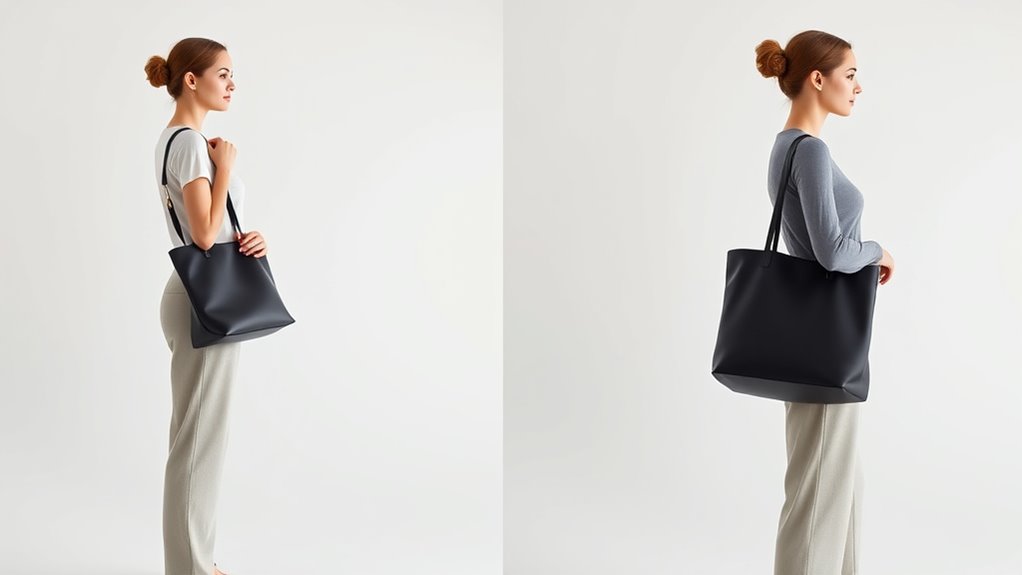
Carrying a bag without paying attention to its placement can considerably affect your posture and overall spinal health. When you don’t consider how or where you carry your bag, you risk developing muscle imbalances, pain, and long-term postural issues. One key factor is the ergonomic design of your bag and how it aligns with your body. An ergonomic design features adjustable straps, lightweight materials, and balanced weight distribution, which can help minimize strain. If your bag isn’t designed with ergonomics in mind, you might find yourself compensating by leaning or tilting your head, which puts unnecessary stress on your neck and shoulders.
Your carrying habits play a significant role in your spinal health. For example, if you habitually carry a bag on one shoulder, you create asymmetry that forces your spine to adapt in unnatural ways. Over time, this can lead to uneven muscle development, misalignment, and discomfort. Switching shoulders frequently and using both straps evenly can help distribute the weight more balanced, reducing the risk of pain and postural problems. If you tend to carry heavy loads, it’s especially important to be mindful of how you place and carry your bag, as heavy weights can exacerbate misalignments and cause chronic issues.
Another essential aspect is the placement of the bag itself. Carrying a bag low on your hips or leaning forward to support its weight can strain your lower back and cause you to develop poor posture habits. Ideally, your bag should sit close to your body at a level that doesn’t cause you to lean forward or sideways. This reduces the torque on your spine and helps maintain a natural posture. When you’re conscious of your bag’s placement, you actively prevent unnecessary stress on your muscles and joints, which can lead to long-term problems if ignored. Additionally, being aware of ergonomic principles helps you make better choices in bag design, promoting healthier posture habits.
Your overall carrying habits influence how your muscles adapt over time. Regularly switching sides, adjusting straps to keep weight centered, and choosing bags with ergonomic features promote healthier posture. Ignoring these details can lead to muscle fatigue, soreness, and even nerve compression. Remember, the goal isn’t just to carry your bag but to do so in a way that supports your spinal health rather than undermines it. Paying attention to ergonomic design and developing mindful carrying habits will help you prevent pain and maintain a balanced, upright posture in the long run.
ergonomic backpack with adjustable straps
As an affiliate, we earn on qualifying purchases.
As an affiliate, we earn on qualifying purchases.
Frequently Asked Questions
How Can I Correct Poor Posture Caused by Bag Weight?
To correct poor posture caused by bag weight, you should prioritize ergonomic design and proper weight distribution. Switch to a bag with padded straps and multiple compartments to evenly distribute weight. Always carry your bag close to your body and avoid overloading it. Regularly switch sides to prevent muscle imbalances, and strengthen your core muscles through exercise. These steps help reduce strain and improve your posture over time.
What Types of Bags Are Best for Maintaining Good Posture?
Choosing bags with an ergonomic design and ideal weight distribution helps you maintain good posture effortlessly. Opt for backpacks with padded straps and multiple compartments to evenly spread the weight across your shoulders and back. Avoid overstuffed totes or shoulder bags that cause uneven strain. By selecting a well-designed bag, you gently support your spine and reduce discomfort, making daily carry a more comfortable and balanced experience.
Is There an Ideal Duration for Carrying a Bag?
You should limit carrying your bag to about 15-20 minutes at a time to prevent shoulder strain. If you carry a heavy bag, take breaks often and switch shoulders frequently. Keep the bag weight light and avoid overloading, as prolonged use can cause discomfort and postural issues. Regularly changing how you carry your bag helps reduce strain and maintain good posture throughout the day.
Can Posture Improve if I Change Bag Placement Regularly?
Yes, your posture can improve if you change bag placement regularly. Practicing bag ergonomics and maintaining posture awareness helps prevent muscle strain and imbalances. By switching the bag from one shoulder to the other and adjusting its position, you distribute weight evenly, reducing stress on your spine. This habit encourages better alignment and strengthens your postural muscles, promoting overall posture health and decreasing discomfort over time.
Are There Specific Exercises to Counteract Bag-Related Posture Issues?
Yes, you can do specific exercises to counteract bag-related posture issues. Focus on ergonomic design and posture awareness by practicing shoulder rolls, chest openers, and back stretches. Strengthening your core with planks and improving shoulder stability helps. Regularly perform these exercises to reduce strain, and make sure to switch bag placement often to promote balanced posture. Staying mindful of ergonomic principles helps prevent long-term discomfort.
lumbar support backpack for posture
As an affiliate, we earn on qualifying purchases.
As an affiliate, we earn on qualifying purchases.
Conclusion
If you keep your bag on one shoulder all day, you might as well be walking around with a giant, lopsided weight attached to your spine—like carrying a mountain on your shoulder! Proper bag placement isn’t just a small detail; it’s the difference between standing tall like a superhero and hobbling around like a broken puppet. So, make sure you’re balancing that bag right, or you might end up with posture so crooked, you’ll need a chiropractor’s miracle!
lightweight ergonomic shoulder bag
As an affiliate, we earn on qualifying purchases.
As an affiliate, we earn on qualifying purchases.
balanced weight distribution bag
As an affiliate, we earn on qualifying purchases.
As an affiliate, we earn on qualifying purchases.
Halloween Picks
halloween
As an affiliate, we earn on qualifying purchases.