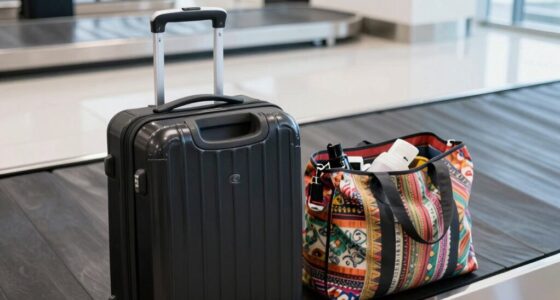
TSA locks are designed to let security agents open your luggage without damage, but confusion arises over which types are allowed and how effective they really are. Choosing a TSA-approved lock with durable materials and recognized branding helps prevent damage and theft. Avoid simple, cheap locks or ineffective features that could compromise your security. If you want to know exactly what works and what’s pointless, keep exploring how to select the best TSA lock for your trip.

Get your wardrobe favorites delivered free with Prime
- Fast, free delivery on millions of items
- Prime Video, Amazon Music and more included
- Member-only deals all year
Key Takeaways
- TSA-approved locks are necessary for quick, damage-free luggage inspections; non-approved locks risk being cut or damaged.
- Recognized brands and durable materials ensure TSA compatibility and prevent lock breakage during rough handling.
- Simple or obvious lock codes (like “000” or “123”) are insecure and defeat the purpose of security.
- Low-quality locks or overly complex mechanisms can hinder TSA access and reduce security effectiveness.
- Proper packing, labeling, and using TSA-approved locks streamline security checks and minimize delays.
As an affiliate, we earn on qualifying purchases.
What Are TSA Locks and How Do They Work?
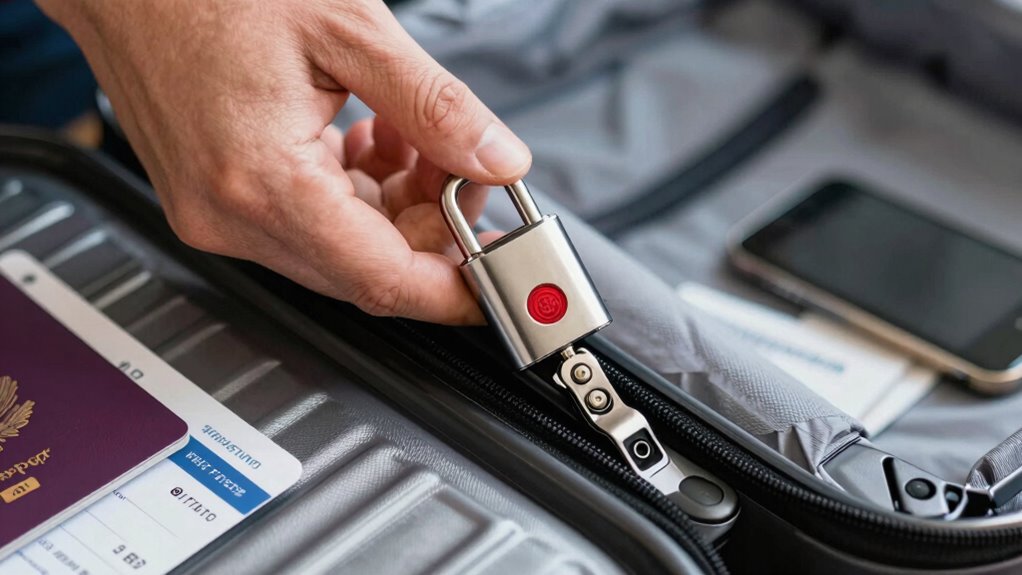
Have you ever wondered how TSA locks keep your luggage secure yet accessible to security officers? These locks are designed with a special master key that authorized TSA agents can use to open them without damaging the lock or luggage. Their lock durability varies depending on the brand, with reputable brands offering sturdy, tamper-resistant designs that withstand rough handling. A well-made TSA lock should resist tampering and breakage, ensuring your belongings stay safe during travel. The brand reputation plays a vital role in selecting a reliable lock, as trusted manufacturers often adhere to strict quality standards. Ultimately, TSA locks balance security with accessibility, but choosing a recognized brand guarantees better durability and peace of mind during your trips. Understanding lock durability is essential for making informed travel security choices.
As an affiliate, we earn on qualifying purchases.
Do You Really Need TSA-Approved Locks?
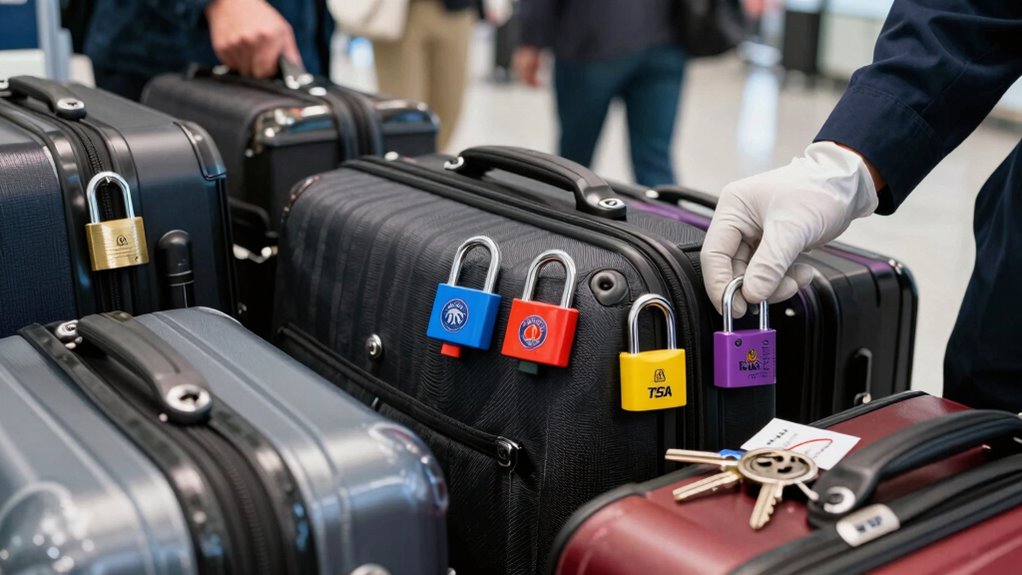
Deciding whether you really need TSA-approved locks depends on your travel habits and destination. If you frequently travel internationally or to busy airports, these travel accessories can offer peace of mind. TSA-approved locks allow security personnel to open your luggage without breaking the lock, reducing the risk of damage or theft. However, if you mostly travel domestically or carry minimal valuables, investing in these locks might be unnecessary. Consider your security concerns and whether you’re comfortable with the potential inconvenience of non-approved locks being cut or broken. Additionally, understanding piercing care and hygiene can help you maintain personal safety during travel. Ultimately, TSA-approved locks are a useful safety measure for frequent travelers or those worried about baggage security, but they’re not strictly essential for every trip. Your choice hinges on your travel style and confidence in your luggage security measures.
As an affiliate, we earn on qualifying purchases.
Which Types of Locks Are Allowed by TSA Regulations?
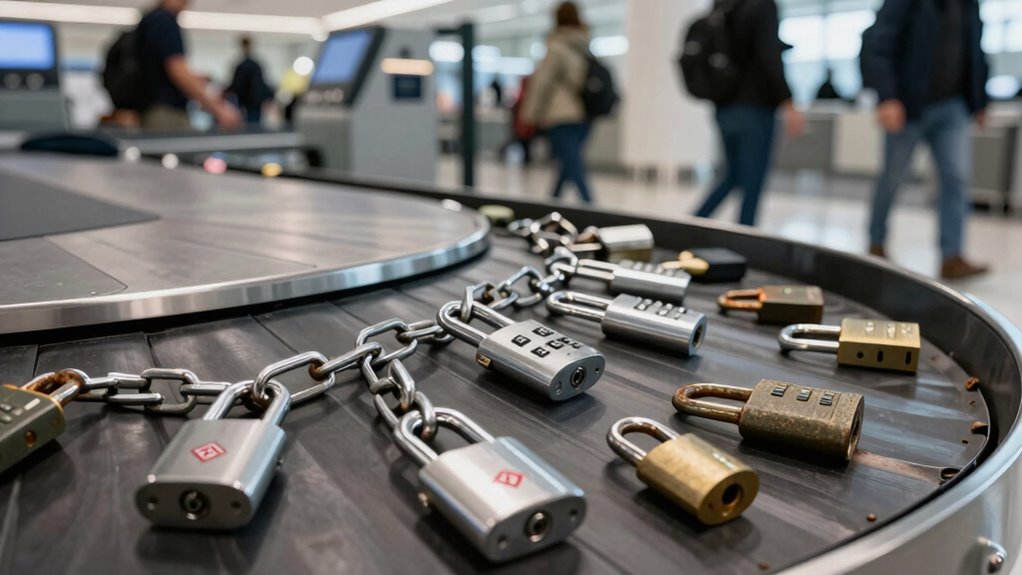
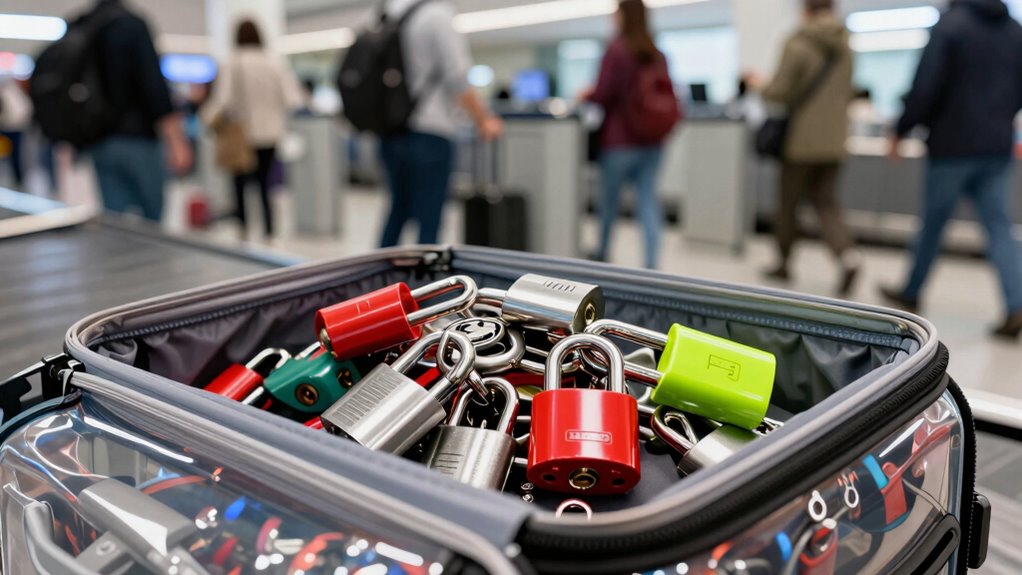
Wondering which locks meet TSA regulations? TSA-approved locks are typically made with durable materials to withstand handling and keep your belongings secure. These locks often feature trusted branding from reputable manufacturers, so you can easily identify their legitimacy. TSA regulations specify that locks must be TSA-compatible, allowing security agents to open them without damaging the lock. Look for locks with a recognized TSA logo or branding that indicates compliance.
| Lock Type | Durability | Branding Recognition |
|---|---|---|
| Combination | High | Widely known |
| Keyed | Moderate | Trusted brands |
| Cable | Moderate | Recognizable |
| Padlock with TSA | High | Industry standard |
| Smart Lock | Varies | Emerging brands |
As an affiliate, we earn on qualifying purchases.
How to Choose the Best TSA Lock for Your Trip
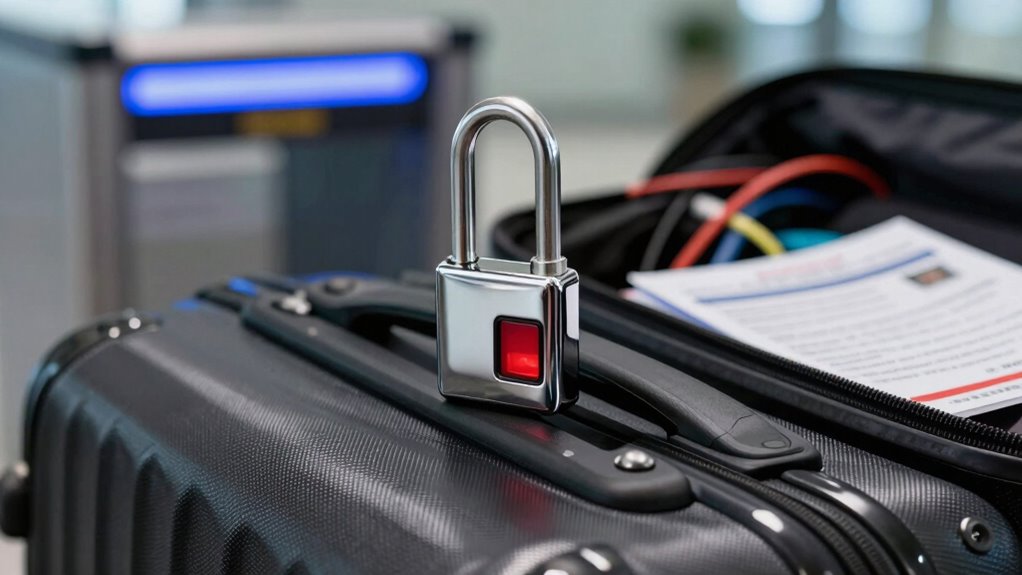
Choosing the right TSA lock for your trip involves considering durability, ease of use, and compatibility with airport security procedures. You want a lock that keeps your luggage security intact without causing delays during inspections. Look for sturdy materials like zinc alloy or hardened steel to withstand rough handling. Ease of use matters too; digital or combination locks eliminate the hassle of losing keys. Ensure the lock is TSA-approved, so security agents can open it without breaking it. A high-quality TSA lock enhances travel convenience by reducing stress and potential damage. Keep in mind that a reliable lock not only secures your belongings but also speeds up the check-in process, making your journey smoother and more efficient. Selecting a lock that complies with security guidelines can help prevent unnecessary complications during security checks. Choose wisely to enjoy peace of mind throughout your trip.
Common Mistakes Travelers Make With TSA Locks
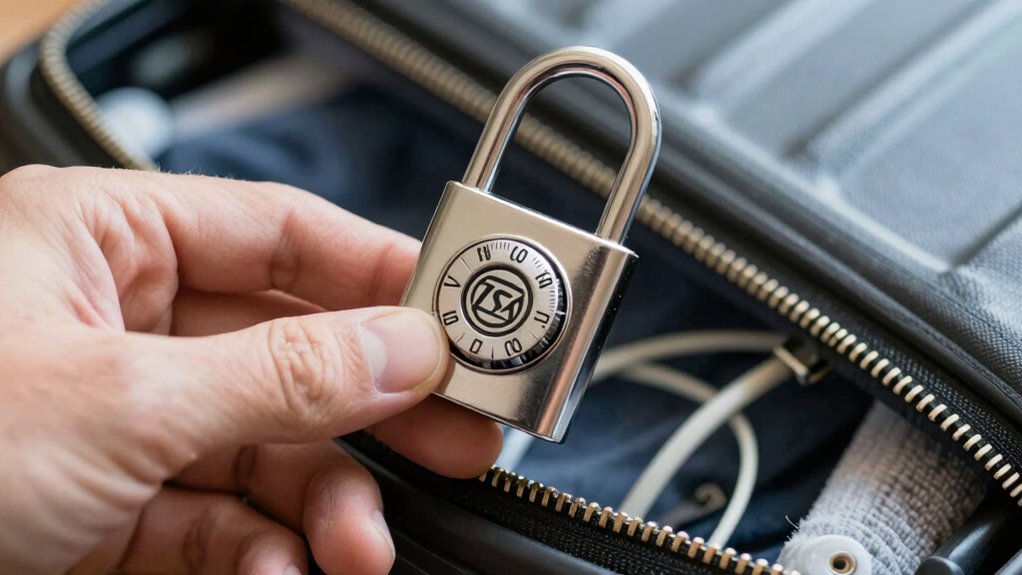
One common mistake travelers make is forgetting to open their TSA lock before checking luggage, which can cause delays or damage. Using obvious or simple codes also increases the risk of someone guessing your lock easily. Paying attention to these mistakes helps guarantee a smoother security process.
Forgetting To Unlock
Many travelers forget to unfasten their TSA locks before going through security, which can cause delays or even result in their luggage being forcibly opened. When you neglect to unlock your luggage, TSA agents may need to cut or break the lock to inspect your belongings, raising security concerns. This oversight slows the screening process and can damage your lock, leaving your bag vulnerable. To prevent this, always remember to unlock your TSA-approved lock before arriving at security checkpoints. Doing so guarantees a smoother process and protects your luggage from unnecessary damage. Keep in mind that TSA agents are trained to open TSA locks without force if they are unlocked, so make sure your lock is properly unlocked to avoid complications during your travel. Proper lock management ensures a hassle-free experience and helps maintain your luggage’s integrity.
Using Obvious Codes
Using obvious or simple codes for your TSA lock is a common mistake that can undermine your security. Travelers often choose easily guessable combinations like “000” or “123,” turning their lock into a combination puzzle for thieves. This not only risks theft but also diminishes the lock’s aesthetic appeal, making it look cheap or unprofessional. To avoid this, select a combination that’s complex enough to deter intruders but memorable for you. Here’s a quick guide:
| Tip | Explanation | Example |
|---|---|---|
| Avoid common combos | Thieves try simple patterns first | “111” or “000” |
| Use a mix of numbers | Adds complexity and security | 3927 |
| Consider lock design | Choose aesthetic locks with complex puzzles | Unique color/shape |
Additionally, choosing a secure locking method can help prevent unauthorized access. Don’t compromise your luggage’s security with an obvious code that’s easy to crack.
Why Do TSA Locks Fail or Get Cut Off?
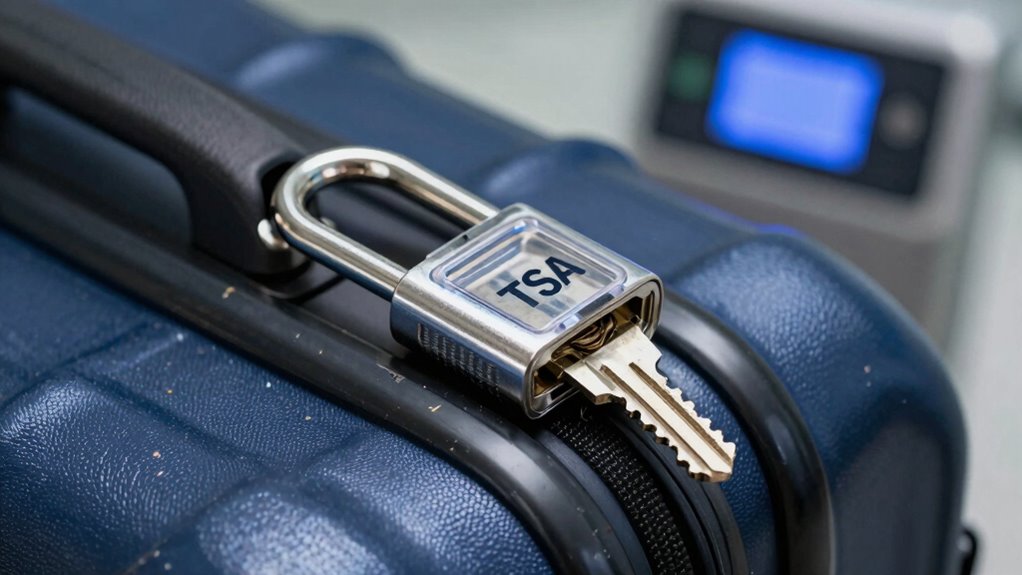
TSA locks can fail or get cut off for several reasons, like damage from rough handling or poor construction. Sometimes, TSA agents struggle to open locks due to access issues or faulty designs. Low-quality locks are more likely to break or be cut during security checks, leaving your luggage unprotected. Additionally, accessibility features can influence how easily TSA agents can operate certain locks, affecting their durability.
Lock Malfunctions or Damage
Locks can fail or get cut off for several reasons, often due to mechanical issues or improper handling. Lock malfunctions happen when the locking mechanism jams, becomes frozen, or breaks, making it impossible for TSA agents to open the lock without cutting it. Lock damage can occur from rough handling during travel, repeated attempts to open faulty locks, or manufacturing defects. If a lock malfunctions, TSA agents may have no choice but to cut it open to access your luggage, which can lead to inconvenience or damage. Sometimes, locks are damaged simply because they weren’t designed to withstand the rigors of travel or because they were improperly installed. Understanding these risks can help you choose more durable locks or better handle your luggage to prevent damage. Additionally, lock durability plays a crucial role in withstanding the stresses of travel and reducing the likelihood of malfunctions.
TSA Agent Access Issues
When locks fail or get cut off during security checks, it’s often because they’re not designed to withstand the demands of TSA inspections. TSA agents need quick access to luggage, so they often cut through locks that aren’t TSA-approved or don’t use universal key access. Your choice of lock impacts travel security; a poor lock selection can lead to damage or loss, especially if TSA staff can’t open it easily. To avoid this, use TSA-compliant locks that allow agents to open your luggage without damaging it. These locks are designed for swift access, reducing the risk of cut-offs. Proper lock selection helps balance your need for security and the realities of TSA procedures, minimizing frustration and damage during the screening process. Additionally, choosing the right tools and safety tips can help you maintain your locks and luggage more effectively.
Poor Quality or Design
Have you ever wondered why TSA locks sometimes fail or get cut off during security checks? Often, the culprit is poor quality or cheap materials used in the lock’s construction. When locks are made with low-grade plastics or thin metal, they’re more prone to breaking under pressure or accidental mishandling. TSA agents need durable, reliable locks, but cheaply made ones can’t withstand the rough handling they often encounter. This can lead to locks being cut off or breaking apart easily, rendering them useless. Poor design also plays a role—locks that aren’t user-friendly or don’t fit well can become damaged during inspection. Ultimately, investing in better-made TSA-approved locks helps prevent these failures and saves you from losing your belongings. Proper material quality is essential for ensuring durability during travel.
Features That Make a TSA Lock Useless or Ineffective
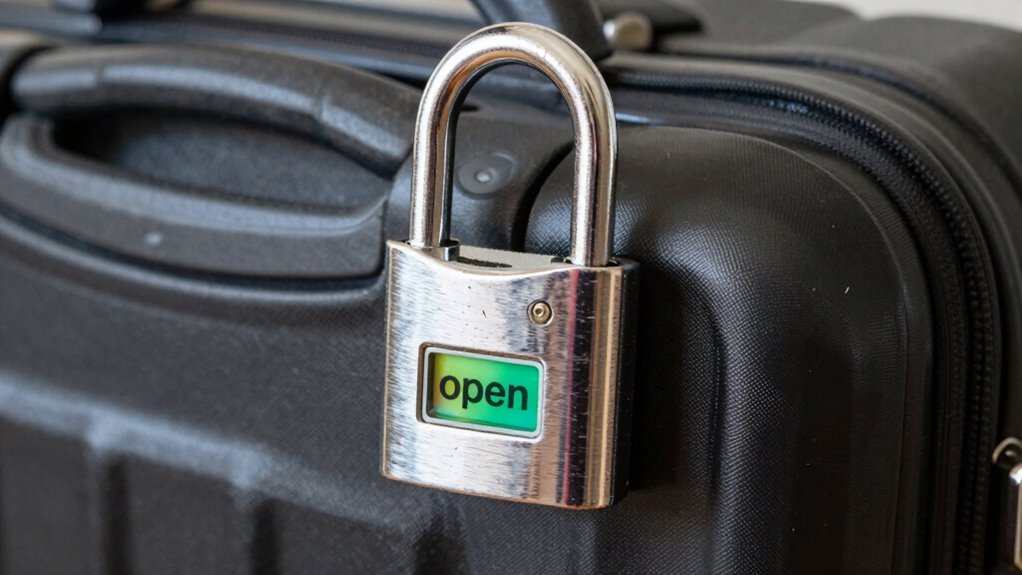
Despite their intended purpose, certain features can render TSA locks ineffective or even useless. For instance, locks with low durability break easily, leaving your luggage vulnerable. An aesthetic appeal might attract you initially, but flimsy designs won’t withstand rough handling, compromising security. Features like overly complex mechanisms can frustrate TSA agents, defeating the lock’s purpose altogether. Additionally, color accuracy in the lock’s design can influence how easily security personnel identify tampering or damage.
Packing Tips to Avoid Lock-Related Delays and Stress
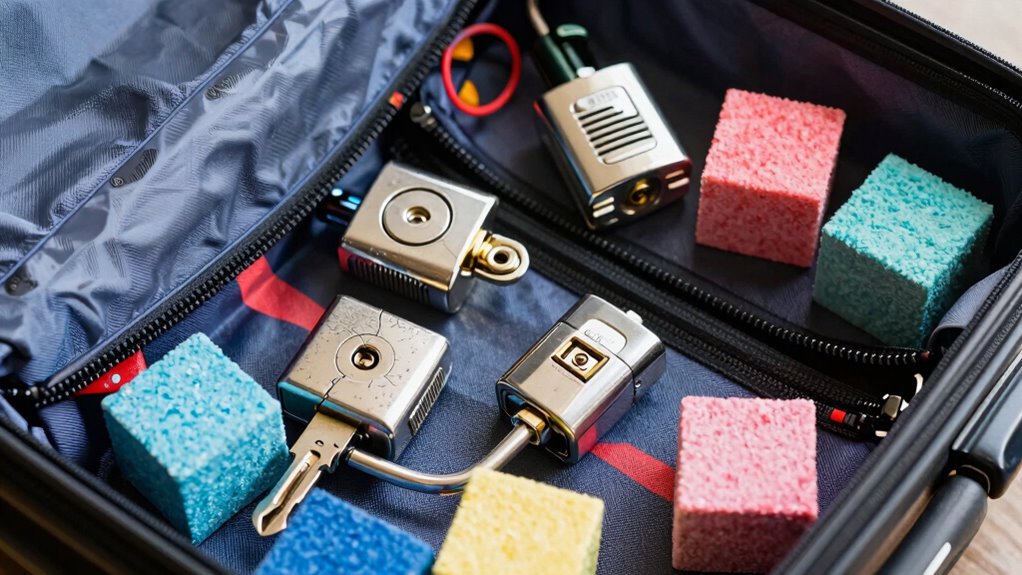
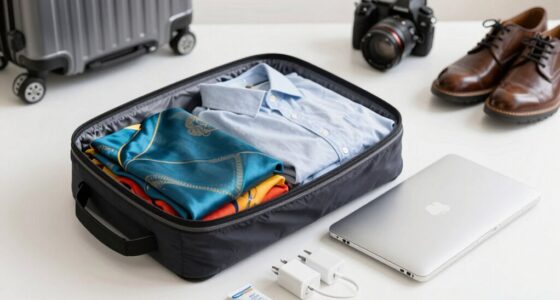
To prevent lock-related delays and stress during security checks, it’s essential to pack smartly and follow some practical security tips. Use travel accessories like clear, organized packing cubes to keep items accessible and visible without needing to open locks unnecessarily. Avoid securing locks on bags containing liquids, electronics, or valuables that TSA agents may need to inspect. Consider using TSA-approved locks that can be opened without a key or combination, simplifying the process. Label your luggage with contact info to prevent confusion or delays if your bag gets separated. Finally, familiarize yourself with airline and TSA guidelines to ensure your packing conforms, reducing the chances of having to open your luggage or deal with lock-related holdups.
Latest TSA Lock Rules and Updates You Should Know
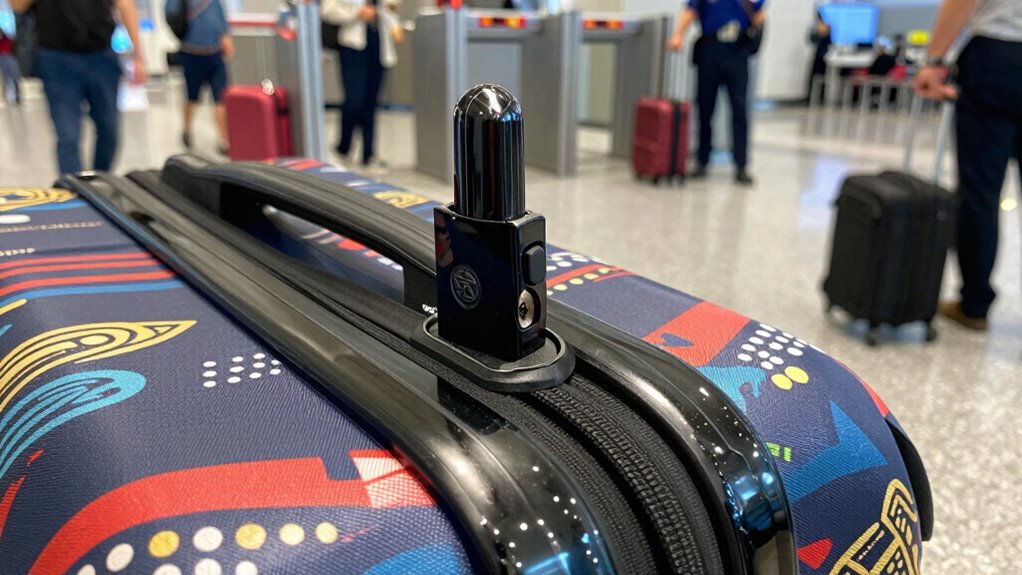
Recent updates to TSA lock rules mean you need to stay informed to avoid delays. Compliance with new policies is essential, especially since some locks now require TSA approval or special markings. Knowing these changes helps guarantee your luggage passes smoothly through security without issues.
TSA Lock Compliance
Staying compliant with TSA lock rules is essential for a smooth security screening process. TSA-approved locks must meet specific standards for lock durability, ensuring they can withstand handling without breaking or becoming unusable. This helps prevent damage during inspection and avoids delays. Additionally, aesthetic designs matter because TSA locks come in various styles; however, they should not compromise functionality or security. Avoid locks that look too complex or fragile, as they may raise suspicion or be difficult for TSA agents to open if needed. Always select a lock that’s TSA-approved, durable, and easy to identify. Proper adherence ensures your luggage remains secure while facilitating quick, hassle-free inspections, giving you peace of mind during your travels.
Recent Policy Changes
Updates to TSA lock policies have introduced new requirements and guidelines travelers need to be aware of. Recently, the TSA has revised rules for baggage security at security checkpoints, emphasizing the importance of using TSA-approved locks. These locks can be opened by TSA agents without harm, speeding up security checks. The changes aim to reduce delays and improve the experience for travelers. To help you understand, here’s a quick comparison:
| Lock Type | Allowed at Security Checkpoints | Damage Risk | Purpose |
|---|---|---|---|
| TSA-approved | Yes | None | Facilitates baggage security inspections |
| Non-approved | No | High | Risk damage and delays |
| Cable Locks | Yes | None | Enhanced baggage security |
| Traditional Locks | No | High | Often damaged during inspections |
Knowing these updates ensures smoother security checkpoints and bolsters baggage security.
Tips for Using Your TSA Lock Safely and Effectively
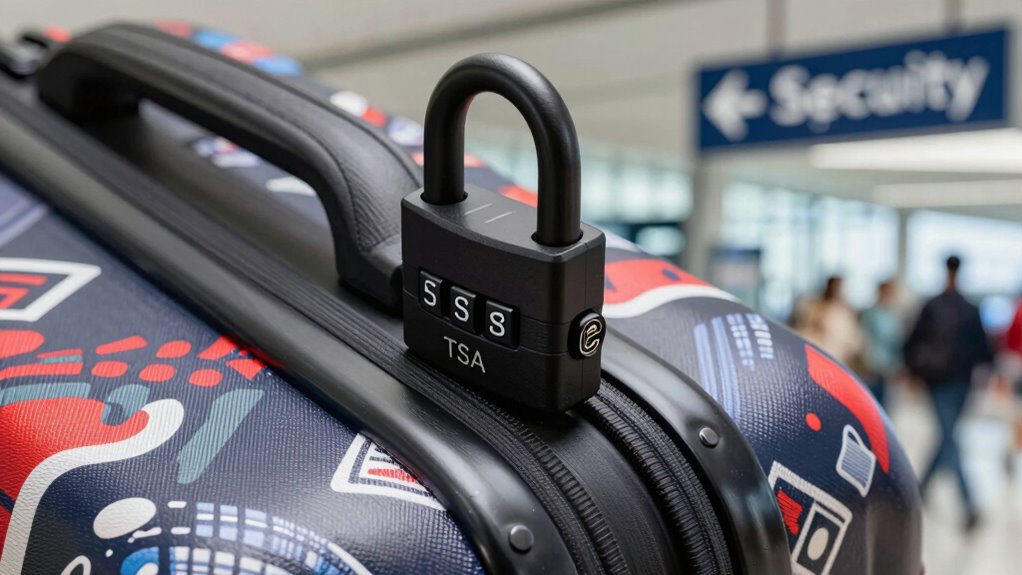
Using your TSA lock correctly can make travel smoother and prevent unnecessary delays. To maximize travel safety and luggage security, always set your lock to a unique combination and double-check it before heading to the airport. Avoid using fragile or overly complex locks that TSA agents might struggle to open without damaging your luggage. Keep a record of your lock’s combination in a safe place, separate from your luggage, in case you forget it. When passing through security, ensure your lock remains intact and unopened unless necessary. Properly secured locks help deter theft and keep your belongings protected. Remember, TSA-approved locks are designed for security checks, so use them wisely to balance convenience with safety.
Frequently Asked Questions
Are There Any Specific Brands Recommended for Tsa-Approved Locks?
You should consider lock brand recommendations like TSA-approved zipper locks or cable locks, as they’re often recommended in TSA lock reviews for their reliability. Brands like Master Lock and Travel Sentry are popular choices because they meet TSA standards and are durable. When choosing, check the TSA lock reviews to guarantee the lock’s quality and compatibility. Opt for a trusted brand to avoid issues at security checkpoints and keep your belongings safe.
Can TSA Locks Be Used on Carry-On and Checked Luggage Simultaneously?
Using TSA locks on both carry-on and checked luggage is like having a universal key—your locks can work on multiple bags if they’re compatible. Just verify your TSA lock’s compatibility before locking each piece. If your lock isn’t suitable for both, consider lock replacement. This way, TSA agents can easily open your luggage without damage, making your travel smoother. Always check lock compatibility to avoid hassles at security.
How Do I Identify if a Lock Is Truly Tsa-Compliant?
To identify if a lock is truly TSA-compliant, look for the official Travel Security Administration (TSA) logo on the lock. These locks are designed to withstand travel security checks, so check the lock’s durability by ensuring it’s made from sturdy materials like hardened steel or high-quality plastic. A TSA-approved lock allows TSA agents to open your luggage without damage, reducing risks during travel security inspections.
Are Electronic or Smart Locks Tsa-Approved or Allowed?
Electronic or smart locks are generally not TSA-approved because they lack a universal security feature that allows TSA agents to open them without damage, which is essential for theft prevention. If you want to guarantee your lock is TSA-compliant, look for a lock with a recognized master key system. Avoid relying solely on electronic security features for theft prevention, as they may complicate airport inspections and increase the risk of damage.
What Should I Do if My TSA Lock Gets Damaged During Inspection?
If your TSA lock gets damaged during inspection, you should first assess if it’s repairable. If not, consider lock repair options or replacing it altogether. Keep any receipts for potential insurance claims, as some policies cover damage caused during travel. Contact your airline or travel insurance provider to understand your coverage and next steps. Taking quick action guarantees your belongings stay secure and helps you recover costs efficiently.
Conclusion
Knowing what TSA locks are and how to use them properly can save you time and stress during travel. Some locks may seem secure but are actually ineffective, so choose wisely. Don’t worry—by following TSA guidelines, you can keep your belongings safe without hassle. Even if you think it’s unnecessary, a good TSA lock can prevent delays and lost items. Stay informed and pack smart for a smoother, stress-free journey.
Halloween Picks
halloween
As an affiliate, we earn on qualifying purchases.